Oily Sludge Treatment From Ponds

Working in Ponds and Lagoons

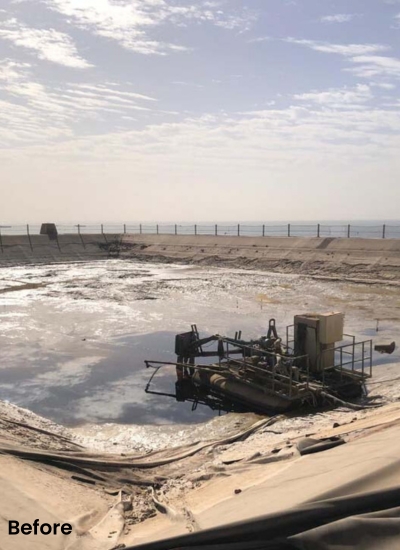
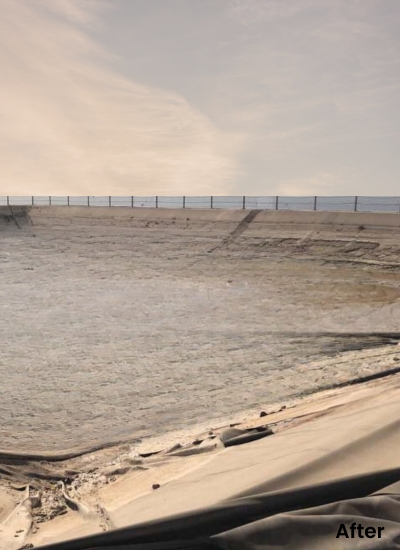
Sludge held in open ponds and lagoons has usually been there long enough to stratify, weather and take up rainwater and windblown solids. It cannot be characterised from a single sample, and the volume is rarely known accurately until work starts. The service is built around that uncertainty: a horizontal decanter separates oil, water and solids continuously as the pond is worked through.

Project sequence

PhaseActivity
SurveySampling across the pond to establish stratification, solids loading and working volume
MobilisationSkid mounted plant transported to site and set up without permanent works
ExtractionSludge drawn from the pond and screened ahead of the decanter
SeparationContinuous decanting into oil, water and solids while extraction continues
DemobilisationPlant removed and the site left with the treated fractions routed as agreed

What comes back

FractionDisposition
Recovered oilPurified sufficiently for resale rather than disposal
Separated waterTreated to the site discharge limit, see contaminated water treatment
Dewatered solidsReduced in volume and mass before shipment to approved disposal

Equipment and treatment parameters are set per project, because pond conditions differ widely between sites. Related duties: crude oil sludge treatment and slop oil treatment.

What the Service Delivers

Water, oil and solids are separated into three distinct streams rather than a partially resolved mixture.

Continuous decanting means extraction and separation run together, so the campaign is governed by pond volume rather than by settling time.

Oil recovered from the pond is purified to a condition where it can be sold, which offsets part of the cost of the campaign.

The volume leaving site as waste is reduced to the dewatered solids, and the water is treated to the limit that applies at the boundary.

Engineering FAQ

Why can a pond not be characterised from one sample?

Sludge held in open ponds and lagoons has usually stratified, weathered and taken up rainwater and windblown solids, and the volume is rarely known accurately until work starts.

What plant is brought to site?

Skid mounted plant, transported in and set up without permanent works. A horizontal decanter separates oil, water and solids continuously while extraction continues.

What comes back from the pond?

Recovered oil purified sufficiently for resale, separated water treated to the site discharge limit, and dewatered solids reduced in volume and mass before shipment to approved disposal.

Talk to an Engineer

Send the pond dimensions, any sludge analysis you hold and the disposal routes available. We will return a scope of work and a mobilisation plan. Other services are listed under services.